
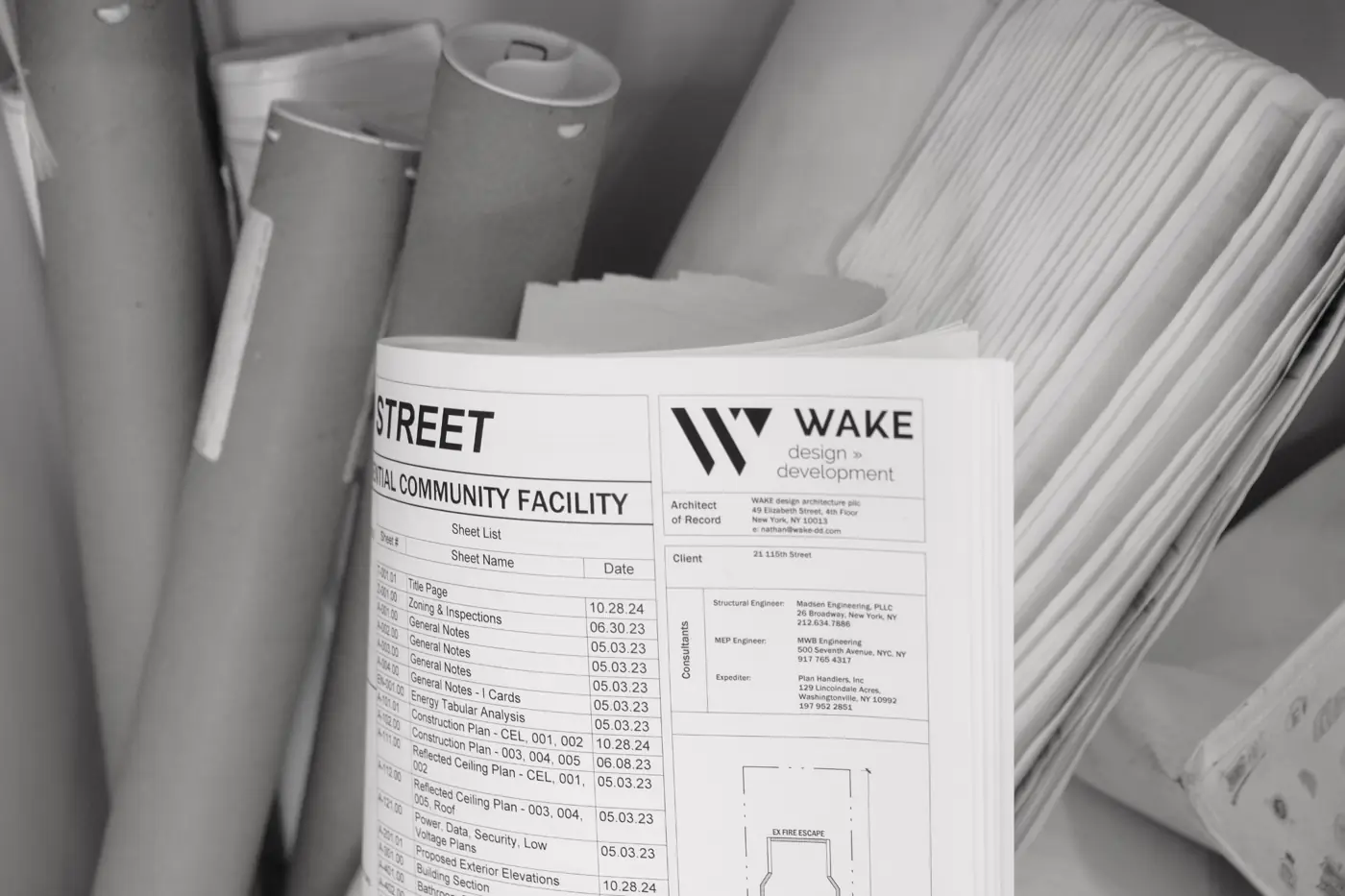
Filing for Permit Approval in NYC
Filing your construction project in NYC is not an impossible feat. Unlike other jurisdictions, NYC is relatively well-documented and has established some amazing public resources that make it easy to access zoning, landmarks, and general building information. The first step in this process is to identify the project scope of work. After which you can identify what project type/category you will be filing. Currently the DOB is categorizing projects into Alteration projects, Building Systems installation and modification, Construction Equipment, Demolition, New Build and Renovation projects.
One of the most important things to understand before filing is that the NYC Department of Buildings (DOB) reviews projects based not only on the work being proposed, but also on how that work affects life safety, occupancy, egress, zoning compliance, and the existing Certificate of Occupancy. Understanding where your project falls within these categories early on can save significant time during design and review.
Alteration Projects
Alterations project types are projects that require a new Certificate of Occupancy (CO).
Examples of work that would require a new Certificate of Occupancy, also referred to as Alt. CO, are as follows:
- Reduction or demolition that reduces the building’s floor area
- Reducing a building’s footprint to increase rear yard access
- Changes to how you egress (exit) your building
- Including the number of exits, location of exits, length of travel distance, etc.
- Changes in occupancy classification as noted by the building code and conversions in changes of use as denoted by Zoning Resolution 12-10
- Changing a previously industrial building to residential
- Increasing the dwelling unit or bedroom number of a building
- Reconfiguring your residential home to have additional rooms
The typical filing time will depend on the scope of the project. For landmark projects, an additional filing and review process must be completed with the Landmarks Preservation Commission (LPC), which can add additional time to the approval schedule.
Projects that require a new Certificate of Occupancy are typically more heavily scrutinized because they often impact occupant safety, accessibility, zoning compliance, or building use. These applications usually require full architectural plans, code analysis, and coordination between multiple consultants including structural, MEP, sprinkler, and energy code professionals.
For smaller projects that do not affect occupancy, use, or egress, the filing process is generally simpler and may not require a new Certificate of Occupancy.
Building Systems Installation & Modification
Not every DOB filing involves major architectural work. Many projects involve upgrades or modifications to existing building systems. These filings may include:
- Mechanical system upgrades
- HVAC installations
- Boiler replacements
- Sprinkler or fire alarm modifications
- Plumbing work
- Electrical service upgrades
- Elevator modernization
Depending on the scope, these applications may be filed independently by licensed trade professionals or as part of a larger alteration application. Even relatively straightforward systems work may trigger additional review if the building is landmarked, mixed-use, or subject to energy code upgrades.
Construction Equipment Filings
Temporary construction equipment often requires separate DOB permits and approvals prior to installation. This can include:
- Sidewalk sheds
- Scaffolding
- Cranes and derricks
- Construction fences
- Temporary shoring systems
These filings are especially common in larger façade restoration projects and new construction sites. In dense urban environments like NYC, public safety and pedestrian protection are major priorities, so these permits are typically reviewed carefully.
Demolition Projects
Demolition filings can range from interior non-structural demolition to complete building takedowns. The level of review depends heavily on the building type, age, occupancy, and structural conditions.
Typical demolition filings may include:
- Interior gut renovations
- Partial demolition of structural components
- Full building demolition
- Emergency stabilization and removal work
Prior to approval, the DOB may require asbestos inspections, utility disconnect letters, rodent mitigation plans, and environmental reviews. Adjacent property protections and site safety requirements also become increasingly important in larger demolition projects.
New Build Projects
If you have become an owner of one of those NYC unicorn empty lots (or you have decided to wipe the slate clean by demolishing the existing building), then you will fall under New Build.
New construction projects are among the most involved filing types within NYC. These projects require extensive zoning analysis, code review, and coordination with multiple city agencies before permits are issued.
Some of the key items reviewed during a New Build filing include:
- Zoning compliance
- Floor Area Ratio (FAR) calculations
- Height and setback limitations
- Egress and life safety systems
- Accessibility compliance
- Structural design
- Energy code compliance
- Site safety requirements
New construction projects may also require approvals from agencies outside the DOB, including the Department of Environmental Protection (DEP), FDNY, LPC, and occasionally City Planning depending on the development.
Because of the complexity involved, timelines for New Build approvals can vary dramatically. A relatively straightforward residential project may move through approvals in a few months, while larger commercial or mixed-use developments can take substantially longer.
Renovation Projects
Renovation projects generally involve improving or modernizing an existing building without substantially changing the building’s occupancy, use, or egress configuration.
Typical renovation work may include:
- Apartment renovations
- Lobby upgrades
- Façade restoration
- Interior fit-outs
- Kitchen and bathroom remodels
- Retail tenant improvements
- Accessibility upgrades
These projects are often classified as non-Certificate of Occupancy altering work and may be filed as lower-level alteration applications depending on the extent of the scope.
Although renovations are generally simpler than New Build or Alt. CO projects, they still require careful review for code compliance, landmark restrictions, and building-specific conditions. Older NYC buildings frequently contain undocumented conditions that can complicate permitting and construction once work begins.
Landmark Considerations
If your building is located within a historic district or is individually landmarked, the Landmarks Preservation Commission (LPC) may require review before DOB approval can proceed.
Exterior work visible from the public way, window replacements, rooftop additions, façade modifications, and storefront alterations commonly require LPC review. Even interior work may require coordination if the building contains designated interior landmarks.
Because LPC approvals occur parallel to the DOB process, understanding these requirements early can help avoid delays later in the project timeline.
Understanding the Filing Process
While every project is different, most NYC permit filings generally follow a similar sequence:
- Existing condition survey and zoning analysis
- Preparation of architectural and engineering drawings
- Submission through DOB NOW or BIS systems
- Plan examiner review and objections
- Resubmission and revisions
- Permit approval and issuance
- Construction inspections and sign-offs
- Final Certificate of Occupancy or project closeout
Receiving DOB objections is a normal part of the process and should not necessarily be viewed as a problem. Most projects require at least one round of comments or clarifications before approval.
Previous System of Project Types
These new guidelines have superseded the previously longstanding method of differentiating work types as Alt. 1, Alt. 2 and NB.
- Alteration Type 1 (Alt. 1) – Changes in use, egress, or occupancy; change in Certificate of Occupancy
- Alteration Type 2 (Alt. 2) – No change in Certificate of Occupancy (C of O)
- New Build (NB) – An entirely new structure
Although the DOB has modernized portions of the filing system, many architects, expediters, and contractors still commonly reference these traditional filing classifications in everyday practice.
Final Thoughts
Navigating the NYC permitting process can initially feel overwhelming, especially for first-time property owners or developers. However, understanding the project classification system and identifying the scope of work early can significantly streamline the process.
The key to a successful filing is preparation: accurate drawings, a clear understanding of zoning and code requirements, and coordination with experienced design professionals can make the difference between a smooth approval process and months of unnecessary delays.